


Remember when “retention” basically meant sending a discount code after someone bought something?
Now? It’s a whole lot bigger than that.
“Retention isn’t just after the sale. Pre-purchase interactions — quizzes, live chat, subscriptions — are retention levers too,” says Theo, Tech & Platform Partnerships Manager at Gorgias.
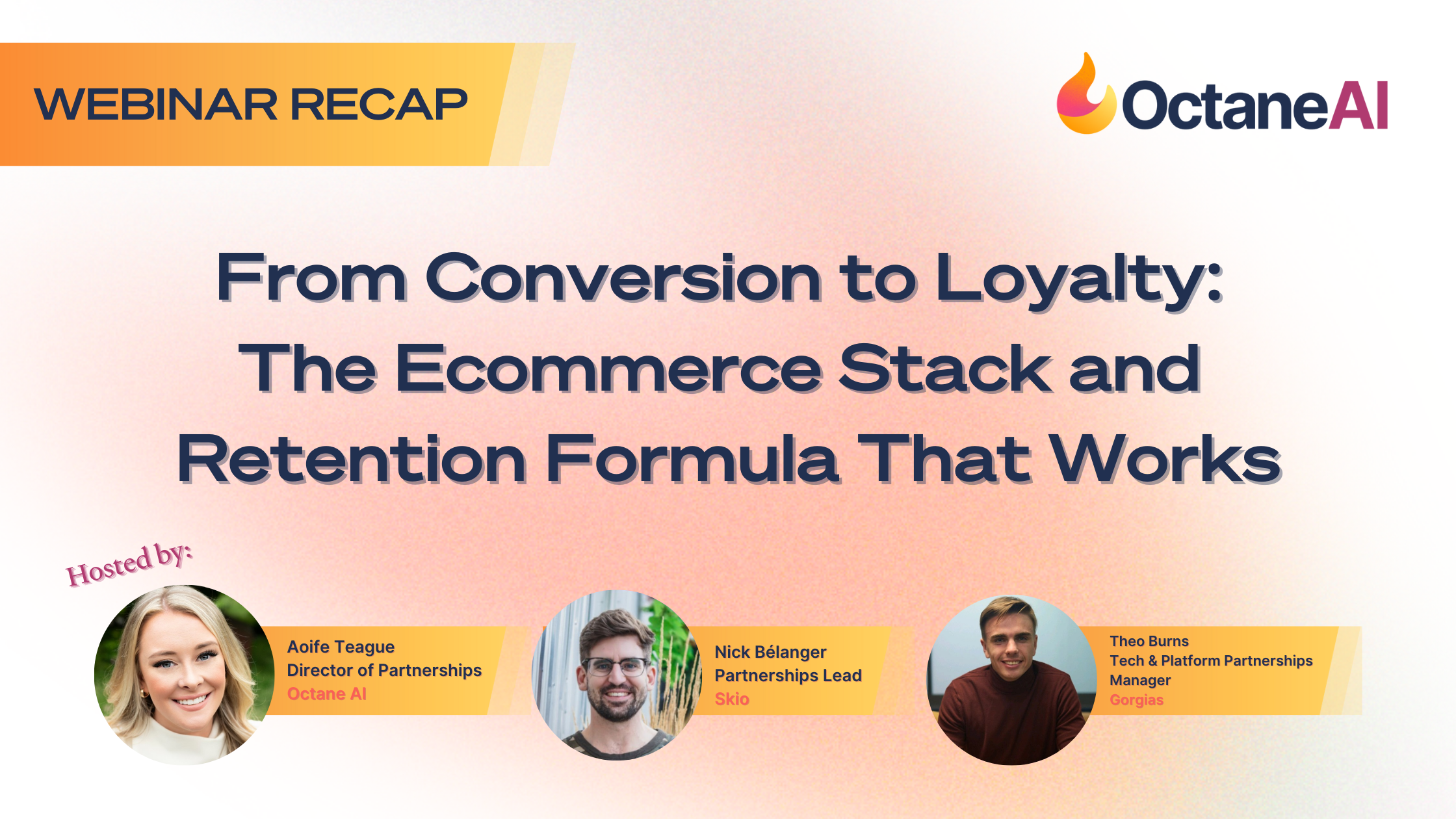
That shift in thinking shaped The Ecommerce Stack that Converts + the Retention Formula to Match webinar, where Octane AI, Skio, and Gorgias shared how leading Shopify brands hook customers early and keep them coming back for more.
In this post, we’ll unpack the biggest takeaways, from making subscriptions a no-brainer to using personalization and AI to turn first-time shoppers into loyal customers.
How Brands Are Evaluating Tech Differently
Theo Burns, Tech & Platform Partnerships Manager at Gorgias, noted a clear shift in how ecommerce brands measure ROI:
“Instead of asking ‘How much sales will this tool drive?’ we’re now hearing, ‘How quickly will it pay for itself? How will it increase LTV or margins?’”
With tighter budgets and closer scrutiny on spend, buyers want proof that a tool will deliver profitability, not just growth. That’s meant:
- Shorter trial periods and faster time-to-value.
- ROI calculators and business cases to justify spend.
- Free CX audits to prove value upfront.
Aoife Teague, Director of Partnerships at Octane AI, agreed, adding that brands are weighing new tools not just for their features, but for how easily they fit into already packed workflows:
“You really have to put yourself in a brand’s shoes. Ecomm teams might be running email, site updates, and multiple apps all at once. Making the experience seamless isn’t optional anymore.”
More people are also involved in purchase decisions, not just ecommerce or CX leads, but finance, operations, and marketing as well.
Nick Bélanger, Partnerships Lead at Skio, said subscriptions face the same pressure. In a crowded Shopify app ecosystem, tech providers must innovate quickly and offer hands-on support.
“It’s not just the features. They need to know someone will be there to help them use those features,” Bélanger said.
With leaner teams, the same person approving software often ends up managing it day-to-day. That’s why Skio introduces account managers before deals close, so brands know exactly who will help them succeed.
Features alone don’t win deals anymore. Brands want partners who can prove ROI, integrate smoothly, and provide real support after the contract is signed.
Loyalty Starts Before the Sale
Keeping customers isn’t just about what happens after checkout — it’s built into every stage, from first click to repeat purchase.
As Aoife of Octane AI put it, first impressions can make or break the relationship:
“Pre-purchase is often the first contact you have with a customer. If that experience isn’t great… If the quiz is confusing or the live chat feels clunky, they may never come back.”
That’s why brands need to focus on creating smooth, intuitive experiences right from the start. Below are practical ways to weave retention into the entire journey.
Turn Pre-Purchase Moments into Retention Wins
Use first-party and zero-party data, like quiz answers, browsing behavior, and onsite interactions, to tailor recommendations and offers to each shopper. When customers feel understood from the start, they’re more likely to stick with your brand.
Example: An Octane AI quiz can recommend a custom skincare routine based on a shopper’s skin type and preferences, then sync that data to Klaviyo for personalized follow-up emails.
Educate Customers Early to Reduce Churn
Prevent post-purchase churn by sharing clear product education, FAQs, and how-to content before checkout. In subscriptions, this could mean helping customers choose the right delivery cadence before they commit, reducing cancellations from over-ordering.
Redefine CX Metrics to Match Retention Goals
Historically, customer service teams were measured by speed, especially how quickly they responded to inquiries. But Burns noted that response time alone doesn’t drive loyalty.
Instead, more brands are tracking:
- Full resolution time (how quickly an issue is fully solved)
- Conversion rate from customer service (are pre-purchase questions turning into sales?)
- Average order value from support interactions (are reps or AI assistants upselling effectively?)
By shifting the focus from speed to quality and conversion, CX teams become part of the revenue engine, not just a cost center.
Make Pre-Purchase Support Effortless
A customer’s first interaction might be through live chat or an AI assistant. If that conversation is quick, accurate, and helpful, it sets the tone for the entire relationship.
Theo Burns shared that Gorgias’ AI Shopping Assistant can answer pre-sales questions, recommend products, and process orders, often with a 70% higher conversion rate than human-only teams.
Design Subscriptions People Actually Want
Subscriptions can be one of the most reliable ways to build predictable revenue, but only if they’re positioned as the smartest way to buy.
Nick Bélanger noted that “subscribe and save 10%” rarely works on its own. Many shoppers hesitate to commit, especially if they’re new to the brand. The offer needs to be compelling enough to overcome that hesitation.
Offer Creative, Flexible Incentives
Instead of relying on a flat discount, play with:
- Escalating discounts to reward long-term subscribers (e.g., 10% off the first three orders, 15% after six months).
- Decreasing discounts to encourage trial without eroding margins (e.g., 20% off the first order, 10% off ongoing).
This flexibility allows brands to front-load value for new customers without locking themselves into unsustainable discounts.
Add Exclusive Perks Subscribers Actually Want
Perks can make the subscription feel like a VIP experience:
- Early access to new product launches or seasonal drops.
- Priority access to customer support queues.
- Access to subscriber-only bundles or limited-edition items.
Bélanger noted that perks don’t always need to cost the brand more. Sometimes, early access or exclusivity is enough to create urgency.
Remove the Fear of Commitment
Customers are far more likely to subscribe when they know it’s easy to leave. Make your “cancel anytime” policy clear and transparent, and avoid tactics that feel like a trap.
Example: Skio allows brands to give customers self-serve options like pausing a subscription, skipping a shipment, or changing delivery frequency, without requiring them to contact support.
Surprise & Delight to Build Loyalty
Unexpected gifts or bonuses can turn a standard subscription into something customers look forward to:
- Include freebies in the first shipment.
- Add milestone gifts (e.g., after three months or six months).
- Send product samples to encourage cross-selling.
This not only adds perceived value but also helps customers discover more of your product line.
Integrate with Loyalty Programs
Theo Burns of Gorgias added that loyalty programs are a powerful complement to subscriptions. Rewarding subscribers with points, instead of just discounts, can help preserve margins while keeping customers engaged.
Better yet, integrating loyalty systems with support tools means VIP subscribers can be automatically tagged and prioritized for faster, more personalized service.
Personalize in Ways That Actually Drive Conversions
Personalization isn’t just about using someone’s first name in an email. It’s about creating experiences so relevant and timely that they feel one-on-one. Each panelist shared how their platform approaches personalization in ways that drive both conversions and loyalty.
Dynamic, Context-Aware Conversations with Gorgias
Theo Burns said personalization means every interaction adapts to the customer in real time.
“If I tell the bot I’m looking for a t-shirt for my mom, it’ll ask about her size, colors, and style. No two conversations are the same.”
By using customer intent, site behavior, and past interactions, Gorgias’ AI Shopping Assistant guides shoppers like a knowledgeable in-store associate.
Example: Tushy uses the AI Shopping Assistant to help customers choose the right bidet, delivering a 13x ROI and 15% higher chat conversion rates than a human-only service.
Post-Purchase Personalization with Skio
Nick Shaw shared how Skio tailors the subscription experience after the first order:
- Tailored gifts: Samples or complementary products based on purchase history.
- Context-driven cancel flows: Video messages tied to the reason for canceling, often recorded by the founder for a personal touch.
These quick-to-produce videos (five clips in 30 minutes) can dramatically improve “save” rates, in some cases tripling them.
Zero-Party Data for Hyper-Targeted Marketing with Octane AI
Aoife of Octane AI highlighted how their quizzes collect rich zero-party data — the kind where customers willingly share about their preferences, needs, and goals. She explained that this data is the foundation for more human, one-to-one marketing:
“For years, we’ve used quiz data to personalize email and SMS — talking to customers like individuals, not a mass list. Now, with AI, we can go even deeper and make that personalization easier for brands to execute.”
And the result? Marketing that feels like a continuation of the initial conversation, rather than a generic blast.
Starting or Fixing a Retention Strategy
When asked how to start or overhaul a retention strategy, the panel landed on two principles: design for retention from day one, and use AI to scale the parts of the customer experience that matter most.
Start with Retention in Mind
Nick Shaw said retention can’t be an afterthought. Acquisition and retention teams should align early on:
- Offers and incentives with realistic expectations.
- Post-purchase flows that guide customers toward their next order.
- Product education to avoid confusion or buyer’s remorse.
Small touches like a great unboxing experience, early wins with the product, and community perks (loyalty programs, exclusive gifts, subscriber benefits) can turn a transaction into a long-term relationship.
Lean Into AI
Theo Burns urged brands to see AI as a retention driver, not just an efficiency tool. From product quizzes to context-aware service assistants, AI can scale personalization without overloading teams.
Building on that point, Aoife of Octane AI shared that brands aren’t just open to AI. In fact, they’re asking for it:
“We’ve seen more brands actively asking for AI quizzes. Some even rename them ‘Smart Quizzes.’ AI is helping brands lift personalization without adding to their workload, and customers love the experience when it’s done right.”
Even small uses can pay off, like analyzing customer reviews to find features people love or pain points that cause churn.
“The more brands hear positive feedback about AI experiences, the more comfortable they get putting AI on the frontlines,” Burns said.
AI helps teams by taking on repetitive tasks, giving them more time to focus on high-value work.
Your Next Growth Leap Starts with Retention
It’s clear from this conversation that the brands thriving right now are the ones treating retention as a full-funnel strategy, not an afterthought.
We heard how ROI is now the deciding factor in tech decisions, how pre-purchase experiences like quizzes, live chat, and subscriptions are driving loyalty, and why personalization has to be dynamic to work. Subscriptions need more than discounts to stand out, and AI is quietly becoming the engine behind faster, more personalized customer journeys.
The takeaway? Your stack should earn its keep by delivering measurable results, connecting every touchpoint, and helping you turn first-time shoppers into lifelong fans.
Ready to see it in action?
Book a demo to explore how Octane AI can help you capture more sales, deepen customer relationships, and scale retention from day one.
